



Bottom-mounted or top-mounted motor?
Comparative analysis of bottom-mounted and top-mounted motor systems from mechanical, thermodynamic, and operational perspectives.
DIBEKSAN Engineering Review and Sectoral Context
In the industrial production of döner kebab, a global representative of Turkish cuisine, the most critical engineering debate is the location of the drive system. This report reveals that the choice is not merely aesthetic; it is a strategic decision dependent on the business's daily capacity, hygiene culture, and service speed.
Key Findings: Busy "buffet" type businesses benefit from the heating plate advantage. Bottom-mounted motorHotels and hygiene-focused restaurants, on the other hand, benefit from the ease of cleaning. Top-mounted motor They prefer these models.
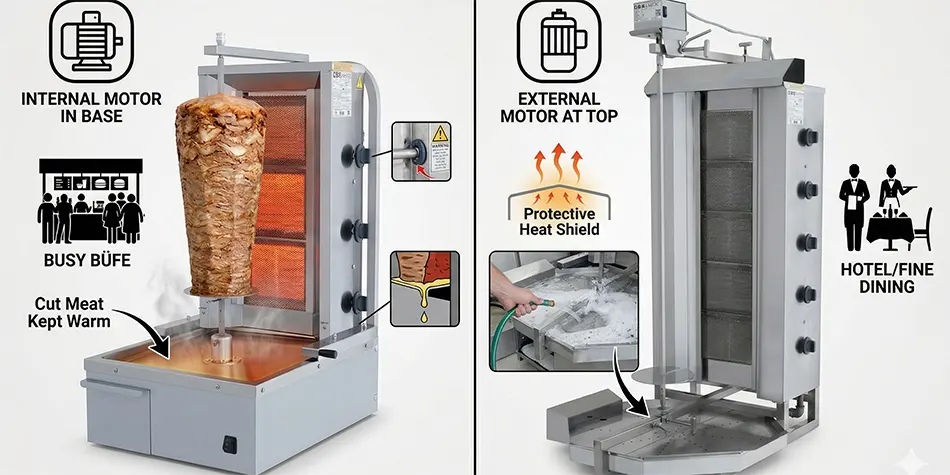
Figure 1: Basic heat transfer and rotation dynamics in döner kebab ovens.
1. The Mechanical Anatomy of Doner Kebab Cooking Technology
The primary function of a döner kebab grill is to precisely rotate unstable loads of up to 80-100 kilograms at high temperatures (typically 1 RPM). The motor's position determines how the heat radiating from the grills reaches the motor and the risk of fat dripping from the meat.
Stability and Heat Management
It's a favorite at traditional döner kebab stalls. Its center of gravity is low to the ground, which provides mechanical stability.
- Warm Storage: Thanks to the integrated heated plate, the meat doesn't cool down after being cut.
- Load Balancing: It minimizes wobble in heavy and unstable rotations.
- Risk: Liquid insulation. Oil and cleaning fluids can put stress on the engine seal due to gravity.
Hygiene and Cleanliness
Ideal for hotels and open kitchens. The motor is located above the cooking area.
- Excellent Hygiene: It is physically impossible for oils or water to reach the engine.
- Easy Cleaning: The base is shaped like a "blind basin" and can be washed with plenty of water.
- Risk: Heat plume. Rising hot air can affect the engine block.
2. Technical and Operational Comparison Matrix
| Feature | Bottom-mounted motor | Top-mounted motor |
|---|---|---|
| Load Capacity | Very High (80kg+) | Medium/High |
| Ease of Insertion | Easy (Just Release and Spin) | Medium (Requires alignment) |
| Base Cleaning | Difficult (Risky circumference of the mile) | Very Easy (Washable with water) |
| Engine Protection (Liquid) | Low (Leakage risk) | Very High (Liquid cannot reach) |
| Meat Temperature After Cutting | High (Heated plate) | Low (if no external heater) |
| Robot Compatibility | Low | High |
Which one for which business? Doner Kebab Machine?
Doner Kebab Stand & Vendor
High circulation, continuous cutting.
Preference: Bottom-mounted motor
Because the meat needs to stay warm and heavy skewers need to be attached quickly, the "Drop-and-Seat" mechanism and heated tray are lifesavers.
Hotel & Chain Restaurant
High hygiene standards, open kitchen.
Preference: Top-mounted motor
According to HACCP standards, cleaning is done with plenty of soapy water. Having the motor positioned higher prevents water contact and provides a cleaner visual presentation.
Hotel & Chain Restaurant
High hygiene standards, open kitchen.
Preference: Top-mounted motor
According to HACCP standards, cleaning is done with plenty of soapy water. Having the motor positioned higher prevents water contact and provides a cleaner visual presentation.
Industrial Automation
Robotic cutting lines.
Preference: Top-mounted motor
For the robot blades to cut all the way to the bottom of the meat (the base), the area underneath must be clear. Top-mounted drive is essential for zero loss.
Critical Care Strategies
Felt Inspection
Replace the engine shaft oil seal every 6 months. Ensure the drain holes are not clogged.
Ventilation
Never block the air vents on the engine block. Lubricate the bearings with heat-resistant grease.
Radiant Stone
Do not apply cold water to hot stone. Radiant cracks are usually caused by operational errors.
Conclusion
Doner kebab grill There is no single right answer to the question, "Bottom-mounted or top-mounted?" Your business's cleanliness culture, service speed, and aesthetic expectations will determine the answer.